LightBlog

mercredi 29 avril 2020

Your Phone app on Windows 10 tests controlling music playback on your Android device

If you have a Windows 10-powered computer, the Your Phone app can prove to be pretty useful: it allows for integrating your computer and your phone, allowing you to call people, message people, see notifications, and much more. The app is also constantly updated by Microsoft to further improve this integration and make it more seamless. Microsoft is now going to include a feature for controlling your phone’s music playback right from your computer.

The feature would allow you to control music currently streaming from your phone, whether we’re talking about locally downloaded music or streaming apps like Spotify, YouTube Music, or Apple Music, without needing to take away attention from your workflow or having to pick up your phone. Tracks, titles, and album art will remain synced between your computer and your phone, and you’ll be able to skip tracks, pause and resume music, and more. You can also change the music source right from your computer by using the dropdown menu in the audio player.

In order to use this feature, you’ll need a PC running Windows 10 (October 2018 update or later), an Android Phone running Android 7.0 Nougat or later, and an app that supports music controls (so pretty much any modern music streaming/playback app). Additionally, whatever music player you’re using must have notifications enabled since that’s what the Your Phone app will be using for controlling music.

The feature in its current state still has a couple of bugs and issues, such as the fact that the “back” button can either do the previous track or rewind track depending on the app. Additionally, YouTube video controls and Audible are currently not supported by this feature.

The feature is currently rolling out right now to people using Windows Insider builds, so it is possible that it will take a few days to show up in the Your Phone app on your computer.

Your Phone Companion - Link to Windows (Free, Google Play) →


Source: Windows Blog

The post Your Phone app on Windows 10 tests controlling music playback on your Android device appeared first on xda-developers.


from xda-developers https://ift.tt/2W9B10r
via IFTTT

Fairphone partners with /e/ to ship the Fairphone 3 with a Google-free OS

Electronic waste is a major issue caused in part by the unwillingness of consumer electronics companies to support their devices for more than just a few years. Many Android smartphone makers only provide software support for 3 years, and only a handful of companies make smartphones that are easy to repair. That’s why 3 people came together in early 2013 to found Fairphone, a company that designs smartphones with their environmental and social impacts in mind. Their smartphones are generally easily repairable and have an abundance of parts available on demand. The company has released three smartphones so far: the Fairphone 1, Fairphone 2, and Fairphone 3. The Fairphone 3 launched in mid-2019 with Android 9 Pie and Google Mobile Services on board, but the company also promotes open-source development for those who want to move away from the Google ecosystem. Now, you can buy the Fairphone 3 with a Google-free OS pre-installed.

Fairphone has partnered with /e/, a company that develops an AOSP-based custom ROM for users who want to run Android without Google’s apps and services on board. /e/ supports a range of mostly older Android smartphones on the market as their work is largely based on LineageOS, the most popular, community-led AOSP-based custom ROM. While LineageOS is already fairly Google-free by nature, /e/ makes a handful of additional tweaks such as disabling the default Google DNS, using a different captive portal URL, and most importantly, including microG support so users can still enjoy some applications that rely on APIs (namely location) from Google Play Services. /e/ also bundles many alternative applications to Google apps, some of which are based on LineageOS’ open source offerings or other open-source projects. The point of /e/ is not to provide a fully FOSS experience, but rather to provide a usable, Google-free Android experience.

To that end, the company sells devices with /e/ pre-installed so users won’t have to mess with ADB and fastboot commands to get a Google-free experience. Their latest offering is the Fairphone 3, which normally retails for €450.00 but costs €479.90 if you buy it with /e/ pre-installed, with the same 2 year warranty and 14 day return policy that Fairphone offers. Existing owners of the FP3 can manually flash /e/ for free, but buying the device with /e/ pre-installed will simply be easier for the average user. /e/ will handle software updates for the device if you buy this version of the device.

Pre-order the Fairphone 3 with /e/

The one thing we have to wait to see is whether /e/ can keep the device updated with newer Android OS releases. The LineageOS maintainer for the Fairphone 2, for example, has ported LineageOS 17.1 based on Android 10 to the device even though Fairphone themselves had to end support with Android 7.1 Nougat. Because Fairphone uses Snapdragon processors in their devices, it’s difficult for them to upgrade their phones after Qualcomm ends BSP support. Third-party Android OSes like LineageOS are able to maintain device support for years past the intended EOL thanks to the hard work of talented developers, and we hope the same will be true for the Fairphone 3 under the helm of /e/.

The post Fairphone partners with /e/ to ship the Fairphone 3 with a Google-free OS appeared first on xda-developers.


from xda-developers https://ift.tt/2WdWsNR
via IFTTT

YouTube for Android TV adopts AV1 video codec in certain devices

News about video codecs may not seem particularly exciting to most users, but they can make a huge impact on our media consumption without us even realizing it. That’s especially true since we’re all stuck at home using the Internet to do online classes, watch TV shows and movies from Netflix, or go down the YouTube rabbit hole. Each of the companies behind your favorite online video service carefully considered which video codec to use to encode their videos to optimize the size without sacrificing heavily on quality or power consumption for the end-user. One video codec that has seen a lot of support from enthusiasts lately is the royalty-free AV1 codec which Google has implemented for some YouTube videos and Google Duo video calls. Now, Google is adding support for watching videos encoded in AV1 in the latest version of the YouTube app for Android TV devices.

The AV1 codec is great for media streams; it allows for higher-quality video at smaller file sizes compared to comparable codecs, reducing bandwidth usage for both the service and the user. The catch here, though, is that there aren’t many SoCs that are capable of hardware-accelerated AV1 decoding. Most SoCs in use on smartphones and Android TV boxes rely on software decoding for videos encoded in AV1, which can be taxing on the CPU and lead to higher power consumption. On the smartphone side, only the MediaTek Dimensity 1000 is capable of decoding AV1, while only a handful of recent SoCs used in Android TV devices support hardware-accelerated AV1 decoding. Those include Broadcom’s bcm72190/72180 and Realtek’s RTD1311/RTD1319.

The changelog for the YouTube for Android TV update does mention that the feature is only available for “supported devices”, suggesting that there may be a whitelist of devices in play.

If you have an Android TV device with a supported chipset, then you can try to download the YouTube update to see whether you’re able to stream videos encoded in AV1. The update is now rolling out through Google Play, but if you don’t see it, then you can also sideload it from APKMirror.

YouTube for Android TV (Free, Google Play) →

The post YouTube for Android TV adopts AV1 video codec in certain devices appeared first on xda-developers.


from xda-developers https://ift.tt/3f2foHL
via IFTTT

Xiaomi releases a GPU driver update for its Snapdragon 865 devices on its Chinese app store

When Qualcomm announced the Snapdragon 865 mobile platform back in December, one of the most interesting new “Snapdragon Elite Gaming” features they introduced was updateable GPU drivers. Normally, GPU driver updates are contained within OTA updates sent to users, meaning the user has to wait for an OTA update to roll out before they can get updated drivers. With the Snapdragon 765 and Snapdragon 865, Qualcomm worked to make it possible for OEMs to distribute GPU driver updates through an app store. The first OEM to take advantage of this feature appears to be Xiaomi as the company has released an Adreno 650 GPU driver update on its Chinese app store.

Xiaomi recently uploaded an application called “GPU Driver Updater” on its Chinese app store. The app, with the package name “com.xiaomi.ugd,” is intended to update the Adreno 650 GPU found in the Xiaomi Mi 10, Xiaomi Mi 10 Pro, and Redmi K30 Pro powered by the Qualcomm Snapdragon 865 SoC. The update brings optimizations to several games including PUBG Mobile, Fortnite, and Honkai Impact 3rd. Updates to OpenGL ES and Vulkan are also contained within the GPU driver update.

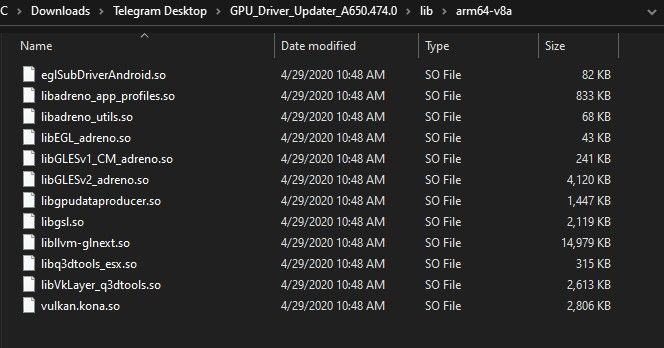
We got our hands on the GPU Driver Updater APK to see what it contains. The APK, as expected, mostly contains updated GPU driver libraries from Qualcomm for the Snapdragon 865 (code-named “kona”.)

Qualcomm Snapdragon 865 GPU driver update

We reviewed documentation that details how OEMs are supposed to enable updateable GPU drivers on their devices. In summary, OEMs grab an empty signed pre-release driver APK from Qualcomm, unpack and resign this APK using a unique package name, place the package in /vendor/apps, set a few system properties, add new games to the whitelist, modify the Settings app to include the GPU driver updater in the preference list, and enable the new driver in Game Driver Preferences in Developer Options. We don’t know exactly what the whitelist is for, but it’s possible that only whitelisted packages can work with the updated GPU libraries. Based on what I’ve read, it’s unclear why these updateable GPU drivers can’t be offered by Qualcomm themselves rather than the OEM. Still, it seems that Qualcomm has made it really simple for OEMs to implement, so hopefully, we’ll see more OEMs implement updateable GPU drivers for their Snapdragon 765 and Snapdragon 865 devices.

The post Xiaomi releases a GPU driver update for its Snapdragon 865 devices on its Chinese app store appeared first on xda-developers.


from xda-developers https://ift.tt/2yaB2Jq
via IFTTT

Samsung is dropping support for MirrorLink, Car Mode, and Find My Car services

Pour one out for yet more services being axed by Samsung. As Samsung keeps modernizing their software experience, they’ve also started to get rid of those services they don’t consider useful or popular anymore. The newest victims of this are 3 car-related services: MirrorLink, Car Mode, and Find My Car. All 3 of these features could, in theory, come in handy for Samsung-owning drivers, but it’s likely they have not received enough usage for Samsung to keep up the support.

MirrorLink is a standard that allows for car-to-smartphone connectivity: users could mirror their smartphone’s display to their car’s head unit. Samsung is set to drop this feature on June 1st, 2020. New users will not be able to sign up anymore, and while existing users will be able to continue using it after that, this comes with a big “if.” As soon as you factory reset your device, change cars, or even update your phone, you should bid goodbye to the feature.

Car Mode is exactly what it sounds like: it puts big icons on the display with the features you’re most likely to access while driving, such as music streaming and navigation. It acted as a decent alternative to Android Auto and Apple CarPlay, however, unlike those, which are industry standards built into cars, Car Mode was just enabled on Samsung phones and you could then mirror it to your car using MirrorLink. Just like MirrorLink, Car Mode is getting the ax come June: the app will not be available from Play Store and Galaxy Store anymore, and trying to set it up will just cause it to force close.

Lastly, Find My Car allowed you to do the exact thing the name says: it was an app for wearable devices that allowed you to, well, find your car. Using GPS functionality, you could track exactly where you parked your car. Support for it is also ending the same day, June 1st. It will not be downloadable and you will not be able to use it after you downloaded it either.


Source: SamMobile

The post Samsung is dropping support for MirrorLink, Car Mode, and Find My Car services appeared first on xda-developers.


from xda-developers https://ift.tt/2VKRWaq
via IFTTT

Huami’s Amazfit X smartwatch with a wraparound OLED display is now on IndieGogo

Huami’s Amazfit brand includes some of the most popular wearable devices in the world. Known for attractive designs and competitive features at affordable prices, the Amazfit family is consistently getting new products. Last year, the company showed off the Amazfit X concept, a smartwatch with a wraparound OLED display. That device is now a reality and it can be purchased on IndieGogo.

At the center of the Amazfit X is the 2.07-inch curved AMOLED display. The display is curved at 92-degrees, which allows it to span across your wrist while maintaining a comfortable fit. The 326ppi HD resolution display shows 100% NTSC color saturation and peak screen brightness of 400 nits.

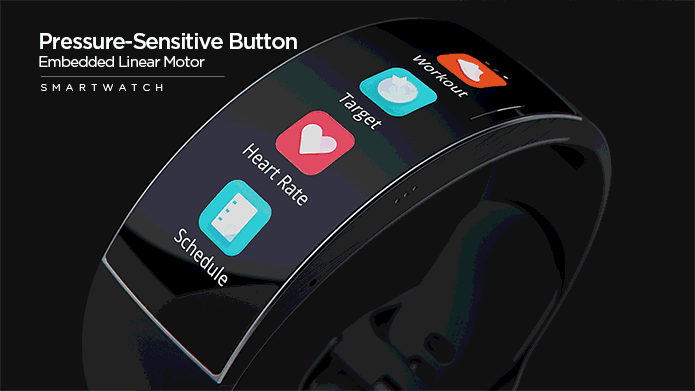
The body of the Amazfit X is made of titanium and it has a sleek button-free design. To make up for having no physical buttons, there is a force-sensitive “pressure button” on the right side. The pressure button responds to touch with vibrations to provide positive feedback.

Amazfit devices are generally geared towards fitness and the Amazfit X has a bevy of health features as well. Huami developed the BioTracker PPG optical sensor for 24/7 continuous heart rate measurement. The watch can also detect stress levels through heart rate variability. The Amazfit X has a SpO2 sensor, 6-axis IMU, and PAI Health technology.

Huami claims the Amazfit X can last up to 7 days on a charge with the 200mAh battery. The watch is available now on IndieGogo in Eclipse Black and New Moon Gold. You can get it now for an early bird price of $149. After that, the price will go up to $179. Huami lists the full retail price at $329. Shipping is scheduled for August.

Specs

Amazfit X

Screen 2.07-inch flexible color AMOLED screen
Resolution: 206×640 pixels
326 PPI
Size 55.4 x 22.8 x 13.6mm
Weight 39g with short wrist strap
Color Eclipse Black, New Moon Gold
Connectivity GPS, GLONASS, Bluetooth 5.0
Sensors PPG Optical HRM Sensor, SpO2 Sensor, 6-axis IMU, Ambient Light Sensor
Lens Materials Corning Gorilla 3 tempered glass and anti-fingerprint coating
Strap Size 22mm
Body Materials TC4 Titanium alloy
Strap Materials Fluororubber
Waterproof 5 ATM
Battery Life 200mAh
Daily use: up to 7 days(test data in lab)[6]
Package Magnetic charging stand, Replaceable long wrist strap, user manual
Sports Modes 9 sports modes
24-hour Heart Rate Monitoring Yes
Smart Notifications Yes

Source: Huami

The post Huami’s Amazfit X smartwatch with a wraparound OLED display is now on IndieGogo appeared first on xda-developers.


from xda-developers https://ift.tt/3bPa34O
via IFTTT

Walmart is launching more cheap Onn tablets, this time with Android 10 on board

Over the last couple of years, the Android tablet market has seen a steady decline. Despite the fact that there are several players in the Android ecosystem, Samsung and Huawei were the only major manufacturers offering Android-powered tablets up until last year. This changed when U.S. retail giant Walmart entered the Android tablet space with its Onn tablets back in May last year. Walmart’s Onn tablets were the first tablets to ship with Android 9 Pie out of the box and they offered low-end hardware at quite an affordable price. It seems like Walmart saw some success with the initial release, as the company is coming back with another pair of tablets this year.

Walmart


According to a recent report from TabletMonkeys, Walmart will be launching two new tablets as part of its in-house Onn brand next month. The higher-end Onn 10.1 will feature a FullHD 10-inch display, a 2.0GHz octa-core MediaTek MT8768WA chip, 3GB of RAM, and 32GB of onboard storage. In comparison, the Onn 10 from last year featured a 1280×800 10-inch display, MediaTek’s MT8163 SoC, 2GB of RAM, and 16GB of onboard storage. The new Onn 10 also packs in 5MP cameras on the front and back, with the entire package being powered by a battery rated for 10-hours of use on a single charge.

The cheaper Onn 8 features the same MediaTek SoC as the Onn 10 but includes a lower resolution HD display, 2GB of RAM and 32GB of storage. Much like the Onn 10, the 8-inch tablet has 5MP cameras on the front and back, along with a battery rated for 10 hours of use on a single charge. Both the tablets will run Android 10 out of the box. It’s worth noting that we haven’t seen any devices with the MediaTek MT8768WA SoC in the past, so we can’t comment on the performance just yet, but the early benchmark results shared by the publication don’t instill any confidence. The tablets managed to achieve a single-core score of 731 in Geekbench 4, with the multi-core score going just as high as 3400. However, the poor benchmark results do make a bit of sense when you take the pricing into account.

Speaking of which, Walmart’s new Onn tablets will retail at $99 for the 8-inch model and $129 for the 10-inch model. As of now, Walmart hasn’t announced a release date for these tablets but we’ll update this post as soon as the tablets go on sale.


Source: TabletMonkeys

The post Walmart is launching more cheap Onn tablets, this time with Android 10 on board appeared first on xda-developers.


from xda-developers https://ift.tt/2W7SZjH
via IFTTT